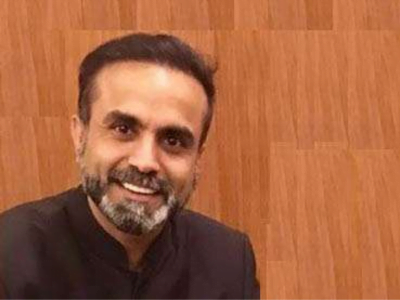
Sadiq Ali’s commitment to expanding higher education access has evolved into one of the most impactful scholarship initiatives supported by Worldwide Education Fund (WEF). What began as a field visit to Tajikistan in 2014 has grown into a structured university scholarship program benefiting 66 students across Central Asia.
During his visit to mountainous Tajikistan, Sadiq Ali encountered widespread youth unemployment, limited academic opportunities, and social instability. Talented students were unable to pursue higher education due to financial hardship and geographic isolation. Many young people lacked access to structured pathways toward economic independence.
That experience shaped a long-term education strategy focused on dignity, self-reliance, and academic advancement.
The Challenge in Mountainous Regions of Central Asia
Remote areas in Tajikistan and neighboring regions face persistent higher education barriers.
Key structural challenges include:
• High tuition costs relative to household income
• Limited access to accredited universities
• Weak career counseling systems
• Geographic isolation from urban education hubs
• Low exposure to leadership and mentorship opportunities
Students from rural communities often complete secondary school with strong academic potential but no financial pathway to university. Without scholarship support, higher education remains inaccessible.
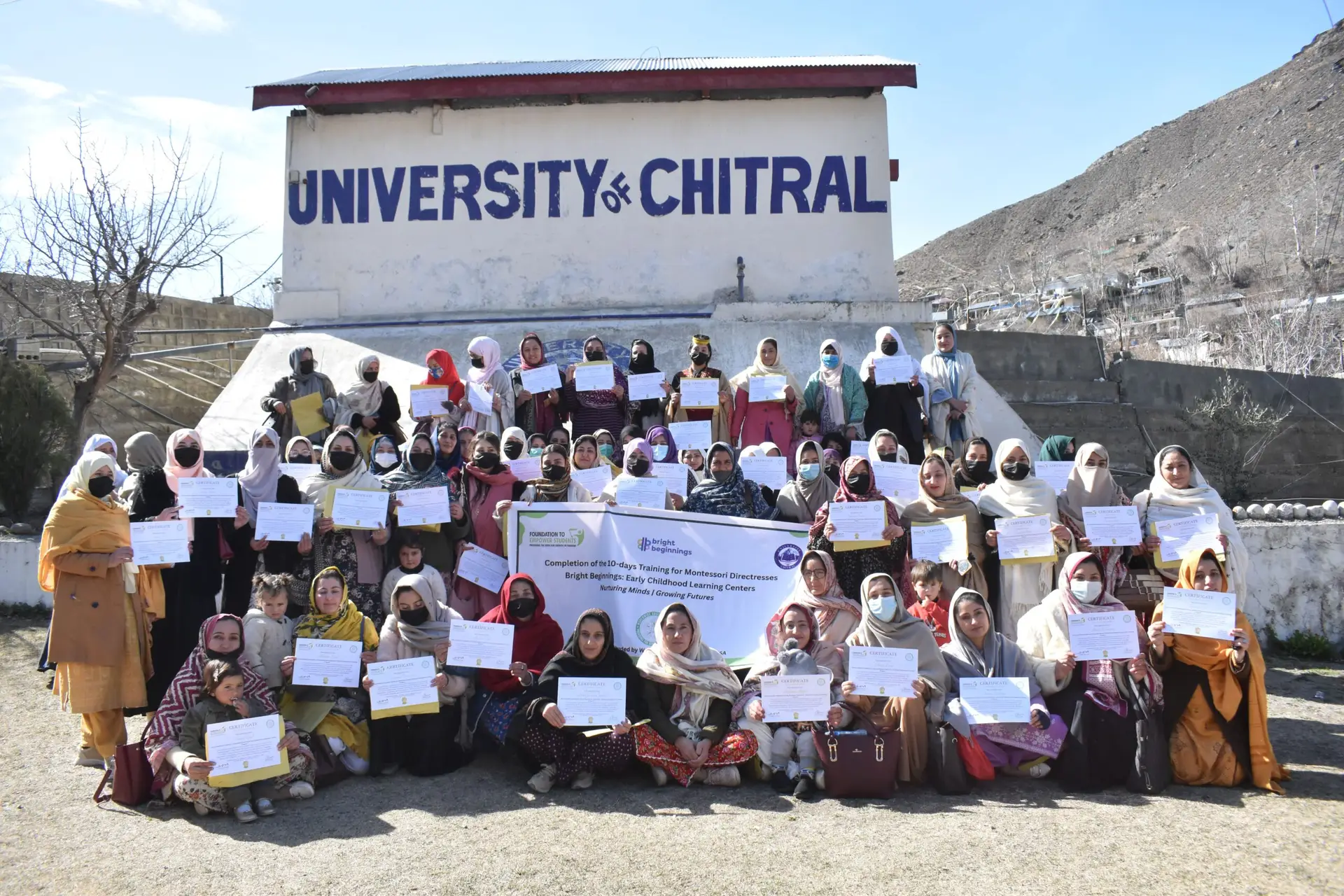
This challenge mirrors conditions in other mountainous regions such as Chitral, Pakistan, where access to university education is limited by infrastructure and affordability constraints.
The issue is not lack of talent. It is lack of access.
For a broader understanding of how early education pipelines support long-term university access, visit:
https://wefdallas.org/early-childhood-learning-center-eclc-lower-chitral/
H2: Measurable Impact and Outcomes
The Sadiq Ali Scholarship Initiative has produced measurable academic outcomes:
• 52 scholarships awarded under AUCA (2023–2026)
• 12 students funded in 2023–2024
• 16 students funded in 2024–2025
• 24 students funded in 2025–2026
• 14 additional scholarships awarded under UCA expansion
• 66 total students supported across both universities
• Average cumulative GPA of 3.15
• First graduating cohort completed degrees with distinction
Several students demonstrated academic excellence and leadership performance. Among them, Manizha Niyatbekova and Zaynab Nazirova stood out with exceptional achievement.
Scholarship continuation depends on academic performance, reinforcing accountability and measurable results.
Long-Term Vision and Sustainability
The long-term objective of the Sadiq Ali Scholarship Initiative is sustainability and scale.
Strategic goals include:
• Building a recurring scholarship funding structure
• Expanding partnerships with accredited universities
• Developing an alumni mentorship network
• Linking early childhood education initiatives with university pathways
• Tracking graduate employment and community reinvestment
By combining structured financial support with academic monitoring, the initiative ensures that funding produces long-term educational and economic impact.
Higher education access in underserved regions requires sustained commitment, not one-time intervention.
Why This Matters for Donors, Philanthropists, Educators, Teachers, and Parents
For donors and philanthropists, scholarship funding delivers measurable return on impact through GPA tracking, graduation rates, and leadership outcomes.
For educators, the program ensures that academically capable students are not excluded due to economic barriers.
For parents, university access creates generational mobility and long-term stability.
For communities, higher education graduates contribute to economic resilience and regional leadership development.
The Sadiq Ali Scholarship Initiative demonstrates how structured investment in education can transform opportunity access across underserved regions.